
If you’re a female founder, leader business owner you don’t need me to tell you that life running a business can be full-on.
Between clients, teams, family, and the never-ending to-do list, most of us know exactly what gets dropped first when life gets busy: our own wellbeing.
In our recent Connect. Learn. Grow. session at The Foundry, alongside our expert Becca Meadows (registered nutritional therapist and leadership consultant) we explored a simple but confronting question:
Why when we notice the physical symptoms, do we continue to undervalue our own wellbeing at the cost of our professional performance?
This blog is an extension of that conversation. In the in-person session we created a space to rethink how we work, and to build strong foundations for sustainable energy, health, leadership and success. So let’s see what we discussed.
Why Women Leaders Put Themselves Last
At the event, Becca asked for a show of hands:
-
Who feels like their wellbeing is the first thing to go when life ramps up?
-
Who notices physical or emotional symptoms as a result?
Most hands stayed firmly in the air.
When we dug a little deeper, familiar themes came up:
-
Identity: “If I’m not always busy, maybe I’m not really successful.”
-
Perfectionism: “If I don’t do all the business tasks myself, it won’t be good enough.”
-
Productivity culture: “ Rest is something you earn (after you have earned your superwoman cape)”
-
Socialisation: “Everyone else seems to be coping… I should be able to as well.”
The cost of this is real:
-
Energy depletion and constant tiredness
-
Cortisol dysregulation (wired but tired, poor sleep, anxiety)
-
Foggy thinking and shaky boundaries
-
Reduced creativity, influence and confidence
And here’s the key point for women in business:
If it affects you physically, it affects you professionally.
If it isn’t showing up at work, it’s usually spilling into your home life or relationships instead.

Beeca Meadows, Founder of Becca Meadows Nutrition, The Foundry and She Thrives
The Stories That Keep Us Stuck
Becca then invited everyone to write down three things:
The physical / emotional symptoms they notice when they deprioritise their wellbeing
What those symptoms impact (business, relationships, confidence, mood)
The story they tell themselves to justify it
Examples looked like:
“If I’m not working every spare minute, my business will fail.”
“If I say no, people will think I’m not committed.”
“I will only be successful if I say ‘yes’ to everything”
These stories quietly separate who we are from what we do. They keep us small and stop us trying something different in case we fail.
Part of stepping into leadership in business, especially as women, is being brave enough to question those limiting narratives we tell ourselves about our value and our worth and rewrite them.
Stress: You’re Not Weak, You’re Wired
Becca often uses an analogy based on an athlete:
We’d never expect a sprinter to rock up to the start line after four hours’ sleep, three coffees and no warm-up. But as women leaders we regularly do the equivalent, then blame ourselves when we don’t feel calm, clear or confident.
Physiologically, stress is clever and protective.
Your body releases cortisol and adrenaline so you can fight or flee. Blood is shunted to your muscles; sugar and fats are pushed into your bloodstream to fuel quick action.
That’s brilliant in short bursts.
But when stress becomes your default setting, your body has to borrow from somewhere. Digestion, hormones, thyroid, immune function and mood can all take a hit.
Becca mentions the “trip wire effect”- When your baseline stress is high, it doesn’t take much to tip you over. When your baseline is lower, you’ve got more capacity to handle the inevitable fires without burning out. We can’t remove all stressors – especially not when running a business. But we can change how we prepare for and recover from them.
Three Strong Foundations for Energy & Leadership
Think of these as your Foundry “leader’s toolkit” – the same way an athlete has a training plan.
1. Make “Rest and Digest” Non-Negotiable
Find micro-moments in your day where your body can switch out of fight-or-flight:
One minute of deep breathing before a Zoom call
Actually sitting down to eat rather than working at the laptop
A short walk between meetings
Small, consistent nudges towards calm give your nervous system somewhere to land.
2. See Rest as Preparation, Not a Reward
Rest isn’t what you do after you’ve earned it.
It’s part of being able to show up well in the first place.
Ask yourself:
What would change if I saw sleep, food and movement as tools for better decisions, better boundaries and better impact?
If this were a critical client project, would I plan it the way I currently “plan” my wellbeing?
3. Replenish What Stress Uses Up
When you’re stressed, your body gets through more:
Protein (for hormones, enzymes, repair)
B vitamins, magnesium, vitamin C (for energy and stress response)
Complex carbohydrates and fibre (for stable blood sugar and mood)
You’re fuelling a high-performing system – you.
Five Practical Shifts for Busy Women in Business
We finished the session with a simple resilience & wellbeing audit and a few practical changes that female founders in the Cotswolds can start this week.
1. Plan Your Wellbeing Like a Project
Anything that matters in business gets:
A budget
A timeline
Clear success criteria
Your wellbeing deserves the same.
Block non-negotiable time for meals, movement, and rest
Outsource where you can – healthy ready meals, childcare swaps, shared cooking
Use tools (yes, even ChatGPT!) to plan shopping lists and quick meals
2. Eat Breakfast (Properly)
You wouldn’t send your kids out without breakfast. Why do it to yourself?
A slice of toast and coffee doesn’t count.
A balanced breakfast with protein + fibre + colour:
Stabilises blood sugar for the rest of the day
Reduces anxiety, brain fog and self-doubt
Makes it easier to make better food choices later
3. Time Your Caffeine
Caffeine isn’t “bad” – but it is a stress signal.
Avoid it first thing on an empty stomach
Always have it with food
Aim to stop by lunchtime (it can hang around for 6–8 hours)
Experiment with decaf or caffeine-free options
4. Treat Cravings as Data, Not a Character Flaw
If you’re craving sugar, your body is telling you something:
You might be under-fuelled
You might be underslept
You might be stressed
Cravings are information, not evidence that you’re weak.
5. See Every Meal as an Opportunity, Not a Test
Ditch the all-or-nothing mindset.
Instead of “I’ve blown it today”, try:
“What can I add to this meal that will support my energy?”
Think in simple building blocks:
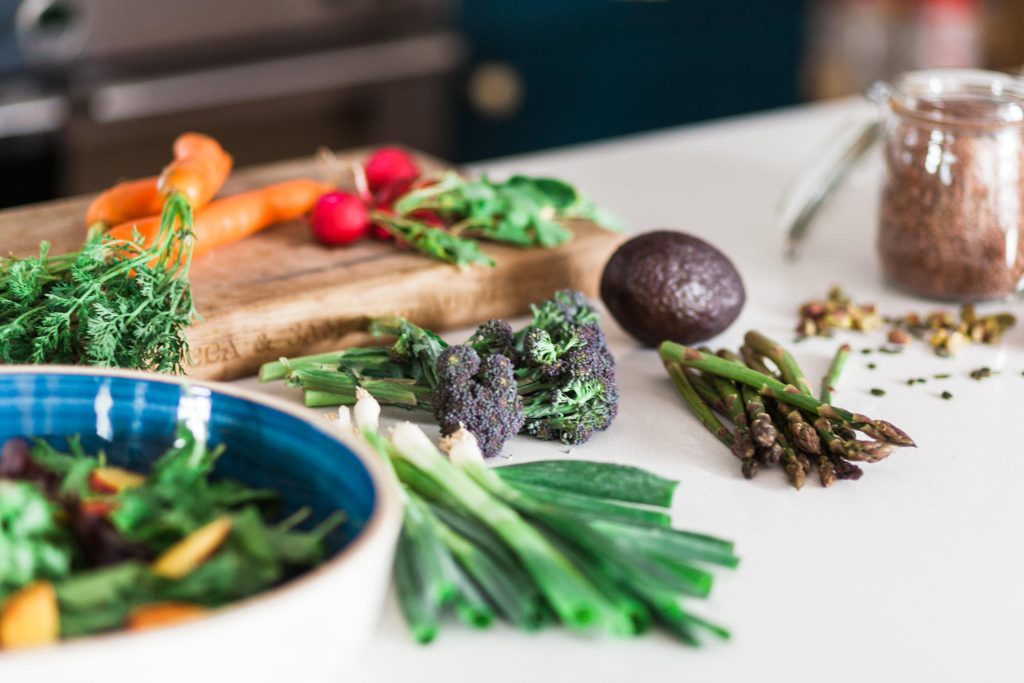
Protein (palm sized): eggs, Greek yoghurt, fish, chicken, tofu, beans
Carbs (¼ plate): root veg, quinoa, chickpeas, beans, whole grains
Veg (½ plate): bags of mixed leaves, frozen veg, chopped salad
Healthy fats (a small ‘thumb’ or ‘sprinkle’): nuts, seeds, avocado, cheese
Batch cook. Eat on repeat. Freeze portions. Make future-you’s life easier.

Your Mini Audit: One Thing You’ll Do Differently
Take a moment now and jot down:
One symptom you’d love to change (e.g. afternoon crash, poor sleep, irritability)
One story you tell yourself that keeps you stuck
One small, sustainable action you’re willing to commit to this week
Keep it tiny and realistic.
Tell someone in your circle – or inside The Foundry community – so you’ve got support.
Why This Matters for The Foundry
The Foundry was created as a Cotswold-based community for women in business who want more than a stack of business cards.
We’re here for:
Connection over competition
Working on you as well as your business
Conversations where clarity, courage and contribution sit at the centre
Energy and wellbeing aren’t fluffy extras.
They’re part of what allows you to build something meaningful without burning out in the process.